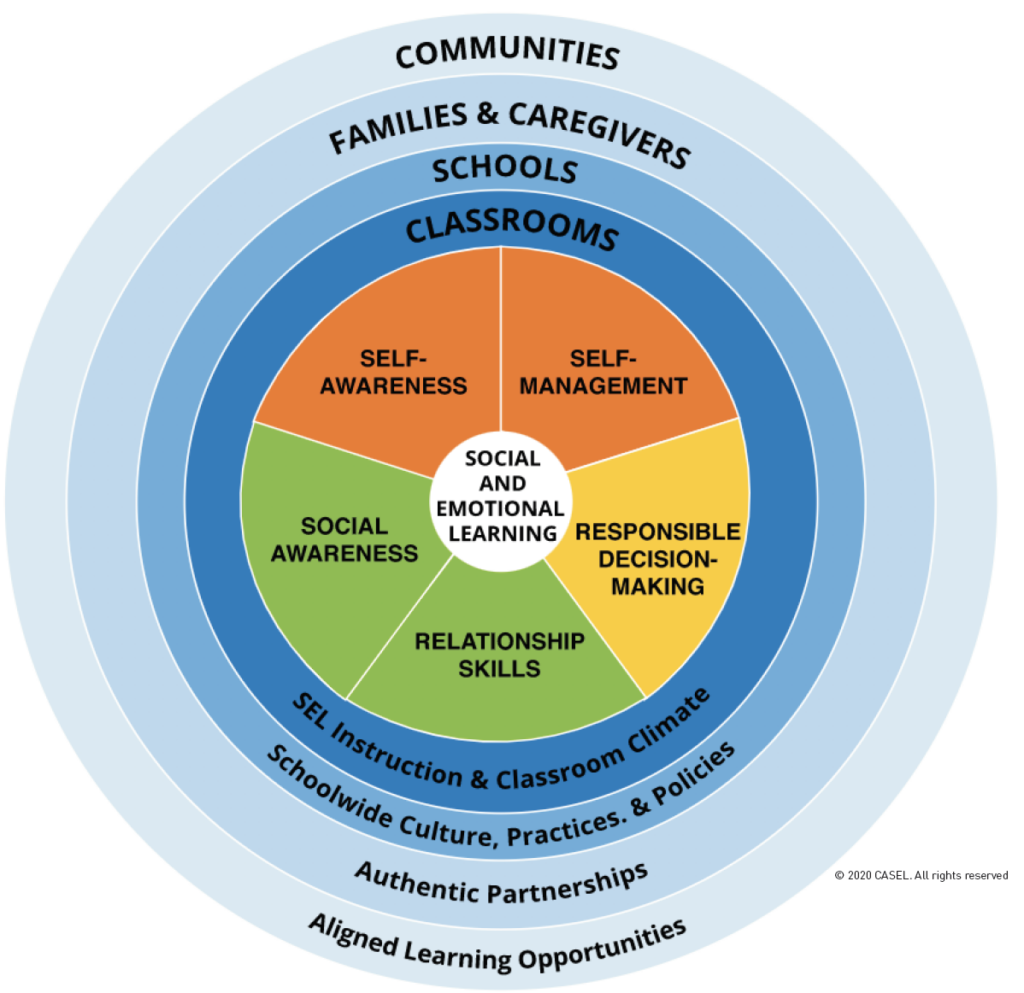
Social and emotional learning (SEL) is an integral part of education and human development. SEL is the process through which all young people and adults acquire and apply the knowledge, skills and attitudes to develop healthy identities, manage emotions and achieve personal and collective goals, feel and show empathy for others, establish and maintain supportive relationships, and make responsible and caring decisions.
SEL advances educational equity and excellence through authentic school-family-community partnerships to establish learning environments and experiences that feature trusting and collaborative relationships, rigorous and meaningful curriculum and instruction, and ongoing evaluation. SEL can help address various forms of inequity and empower young people and adults to co-create thriving schools and contribute to safe, healthy, and just communities.
CASEL: What is SEL? - SEL can help all young people and adults thrive personally and academically, develop and maintain positive relationships, become lifelong learners, and contribute to a more caring, just world.
CASEL: Does SEL Work? - Through decades of research, the evidence is clear: Social and emotional learning (SEL) programs and practices have meaningful, causal impacts on students and adults.
CASEL: Guide to Schoolwide SEL - Develop a shared vision, assess needs and resources, then develop a yearlong SEL implementation plan and budget.
![]()
Overview of SEL Components –
Short Video Series:
Build Staff and Organizational Social Emotional Skills and Supports
- Guidance for schools
- Collaborative practices for teams and organizations
- Compassion Resilience Toolkit a flexibly implemented set of evidence-informed resources to build awareness of compassion fatigue and strategies to increase compassion resilience in adults from a system and individual perspective.
- Actions for Individuals
Resources for Promoting Equity
Greater Good in Education provides readings, practices and other resources to support anti-racist learning.
Addressing Race and Trauma in the Classroom: A Resource for Educators developed by the National Child Traumatic Stress Network (NCTSN) helps educators understand how they might address the interplay of race and trauma and its effects on students in the classroom.
Social, Emotional, and Academic Development Through an Equity Lens provides a framework and action items to address adult beliefs and mindsets as well as school and district policies to build relationships and create equitable learning environments that support positive social and emotional growth.
Committee for Children provides research-based programs, advocacy, and partnerships to equip educators, families, and communities with tools to create safer, more supportive environments.
Collaborate with Students
Speak Out, Listen Up! Tools for Using Student Perspectives and Local Data for School Improvement - WestEd Resource
CASEL Tool Supporting Student Members of the SEL Team - Assemble a team, define team member roles and build a strong team dynamic.
Other Free Activity Banks and Evidence-based/informed Curricula
Sanford Harmony - a program for preschool-6 grade students designed to foster inter-gender communication and understanding, connection, and community both in and outside the classroom and develop boys and girls into compassionate and caring adults.
InspireED - free resources, designed by teens, educators, and SEL experts, empower students to work together to create more positive school climates and foster greater wellbeing in their schools and communities.
Making SEL More Relevant to Teens - offers social and emotional learning activities that are designed to address high school students’ need for status and respect.
Global Game Changers - provides free curriculum and resources that use service learning and talent development as tools to nurture children's social, emotional, leadership, and academic growth in-school, after school and at home.
Program and Intervention Clearinghouse Sites
Navigate the Complex Field of Social and Emotional Learning - By Harvard University
CASEL Program Guides
What Works Clearinghouse
School Health Assessment and Performance Evaluation System (SHAPE) Resource Center
The Wallace Foundation Knowledge Center: Social and Emotional Learning
Center to Improve Social and Emotional Learning and School Safety
Request for Assistance and/or Training
Schools and districts seeking assistance can complete the Request for Assistance and/or Training form. A program consultant will respond in a timely fashion when the request has been submitted.